
What Is Magnifica Humanitas? Pope Leo XIV's Encyclical on AI, Explained
Posted by The DiCocco Family on 24th Jun 2026
What Is Magnifica Humanitas? Pope Leo XIV's Encyclical on AI, Explained
Pope Leo XIV has written a book about artificial intelligence. It's called Magnifica Humanitas, and it's one of the most talked-about Catholic documents in years.
If you've seen the name and want to know what it actually is, what it says, and why it's generating so much attention — this post covers all of it.
What Is an Encyclical?
An encyclical is a formal letter from the pope, addressed to bishops and all Catholics, on a matter of faith, morality, or the Church's relationship with the world. Encyclicals carry significant theological weight — they're not off-the-cuff commentary but carefully considered statements on major questions of the day.
Famous encyclicals include Rerum Novarum (1891), which addressed the rights of workers during the Industrial Revolution, and Laudato Si' (2015), Pope Francis's letter on care for the environment. Magnifica Humanitas stands in that same tradition: a direct response to a defining challenge of our time.
Who Is Pope Leo XIV?
Pope Leo XIV was born Robert Francis Prevost in Chicago in 1955. He is the first American pope and the first Augustinian pope in Church history. Before his election on May 8, 2025, he served as a missionary in Peru, then as Bishop of Chiclayo, Prior General of the Augustinians, and Prefect of the Dicastery for Bishops. He was made a Cardinal in 2023.
He chose the name Leo in deliberate honor of Pope Leo XIII, whose 1891 encyclical Rerum Novarum defined the Church's response to industrialization. That choice signaled from the start that this pontificate would take technology and society seriously.
What Is Magnifica Humanitas?
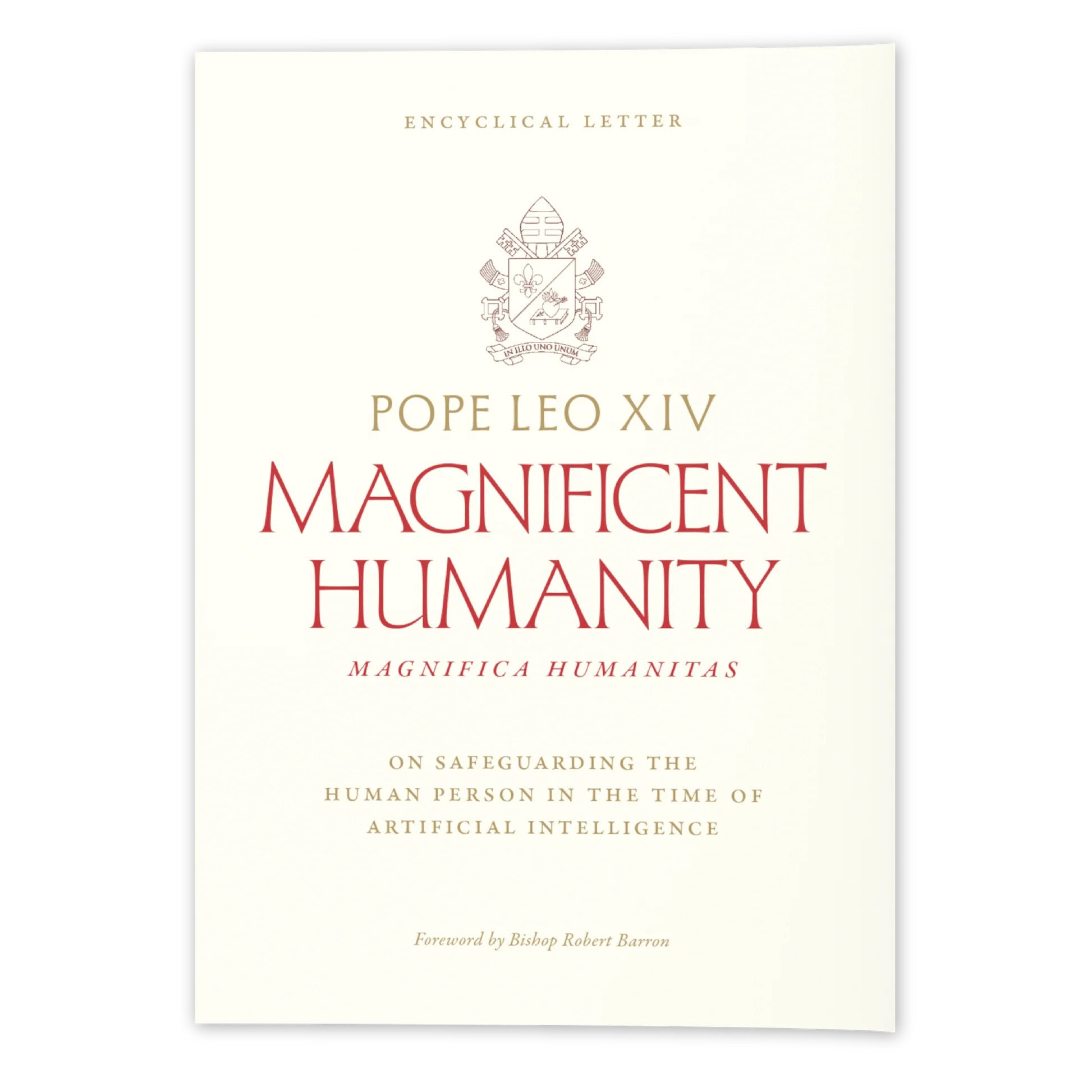 Magnifica Humanitas — Latin for "Magnificent Humanity" — is Pope Leo XIV's first encyclical. The full title is Magnifica Humanitas: On Safeguarding the Human Person in the Time of Artificial Intelligence.
He signed it on May 15, 2026, the 135th anniversary of Rerum Novarum, and the Vatican released it publicly on May 25, 2026. The document is nearly 38,000 words long, structured around an introduction, five chapters, and a conclusion.
The central question it asks: What does it mean to remain fully human in the age of artificial intelligence?
What Does It Say?
The encyclical is built around a powerful choice. Pope Leo XIV frames the AI revolution as a fork in the road: humanity can either build a new Tower of Babel — where technology serves pride, power, and fragmentation — or rebuild the walls of Jerusalem, where it serves solidarity, dignity, and the common good.
AI is not the enemy. But how we develop, deploy, and govern it determines whether it helps or harms us.
It Addresses Real, Specific Concerns
This is not an abstract theological document. Pope Leo XIV works through the practical ways AI is already changing life:
- Job displacement and the future of work
- Surveillance, data collection, and privacy
- The spread of misinformation and manipulation of information
- Algorithmic bias and who bears its costs
- Autonomous weapons and warfare
- People begin to see themselves as data points rather than persons
It Defends Human Dignity as Non-Negotiable
The theological core of the document is straightforward: human beings are made in the image of God, and that gives them a dignity that no technology can enhance or take away. Human worth is not measured by productivity, cognitive capability, or what a machine can or cannot replicate.
That principle has real consequences for how AI systems should be designed, who should govern them, and what protections workers and vulnerable communities deserve.
It Calls for Shared Responsibility
The final chapters move from diagnosis to direction. Pope Leo XIV calls for collaboration between the Church, governments, civil society, and technology companies. He emphasizes education — both in digital literacy and in the moral foundations needed to use AI well. He pays particular attention to workers in developing economies, children and young people, and democratic institutions facing AI-enabled disinformation.
Why Does This Document Matter?
It's the first encyclical entirely focused on AI. Prior popes addressed technology in broader documents, but no pope has dedicated a full encyclical to artificial intelligence before. This is new ground.
The timing is intentional. Signing Magnifica Humanitas on the anniversary of Rerum Novarum is a clear statement: just as the Church responded to industrialization with a moral framework, it is now doing the same for AI.
It speaks beyond Catholics. The encyclical explicitly addresses "all people of goodwill" — ethicists, policy makers, technologists, and anyone thinking about where AI is taking society will find substantive arguments here.
It arrives when people are genuinely anxious. Concerns about AI touching jobs, elections, relationships, and human identity are not abstract. Pope Leo XIV takes those concerns seriously and responds with moral clarity.
Where to Get a Copy
The full Vatican text is freely available at vatican.va. For a print edition, St. Jude Shop carries Magnifica Humanitas at $18.95, with an expected release date of July 1, 2026.
Magnifica Humanitas — On Safeguarding the Human Person in the Time of Artificial Intelligence
The book is also available in three special editions from major Catholic publishers, each with additional commentary from different voices in the Church. If you're looking for a version with more context and reflection built in, those editions are worth exploring as well.
A Document Worth Reading
Pope Leo XIV wrote Magnifica Humanitas because the questions AI raises about human dignity, work, truth, and community are too important to be left to technologists alone. The Church has moral and theological resources that are genuinely relevant here — and a responsibility to bring them into the conversation.
Whether you come to this document as a Catholic, a Christian, or simply someone who uses technology and wonders what it's doing to us, Magnifica Humanitas is worth your time. Small in scope compared to the questions it's answering — but serious, clear, and timely.